Chapter 11 · Companion tool
The Safety Net, the Debt Payoff Race, and the Insurance Audit
Your three buffer stages, sized from your real spending. Then the debt tool: enter your balances and watch avalanche race snowball on your own numbers.
The order of operations
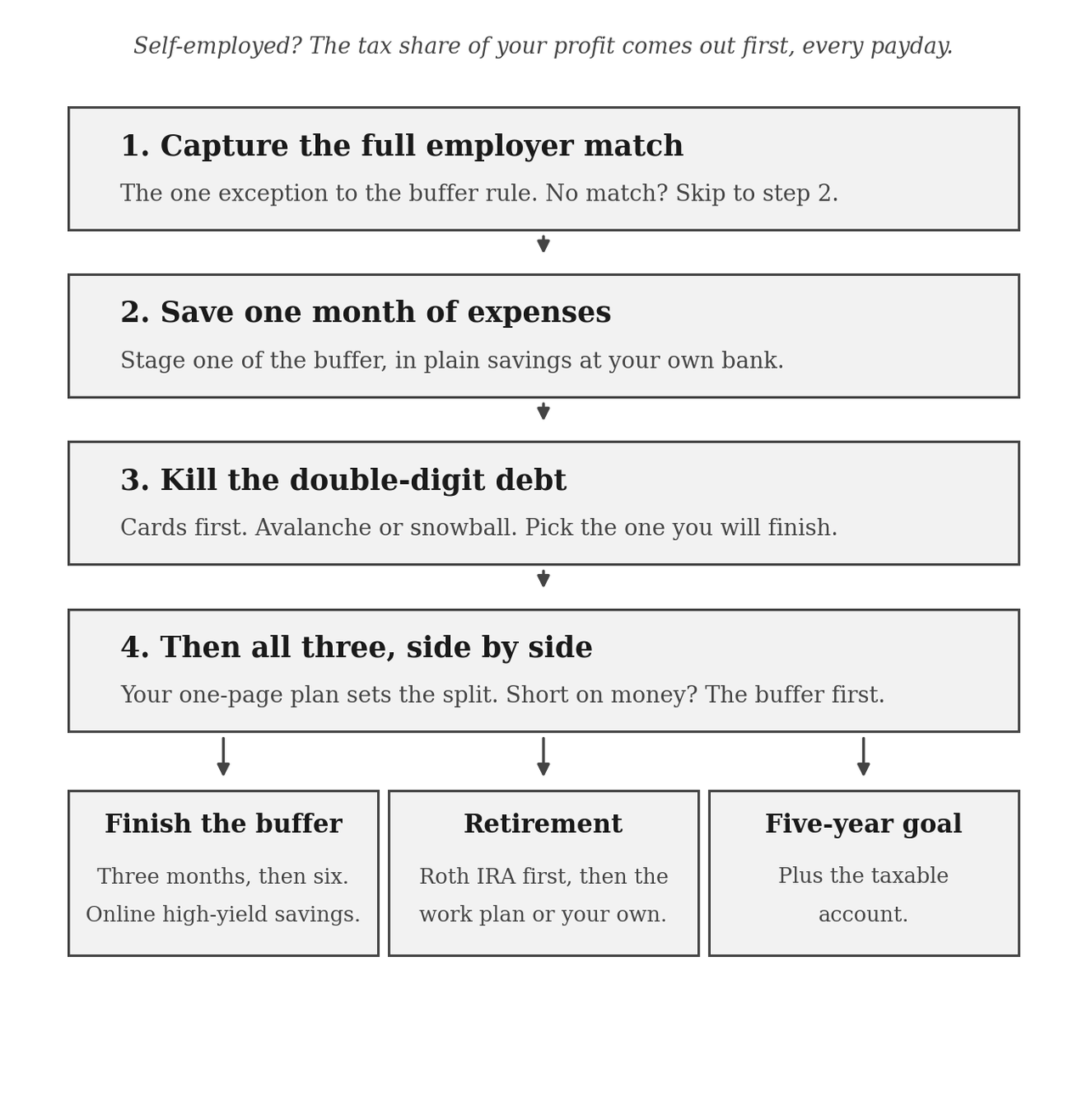
The three stages
The debt payoff race
List every double-digit debt. Minimums on everything; every spare dollar goes to the target, and when a debt is gone its minimum joins the attack. Before you send an extra dollar, try to lower the rate: call the issuer, ask about a 0 percent balance transfer only if you can clear it before the promotion ends (count the 3 to 5 percent fee), or ask a credit union about a lower-rate loan. Federal Direct Loans and a full-time government or 501(c)(3) job? Look up Public Service Loan Forgiveness at studentaid.gov before paying a dollar extra.
Where the buffer actually sits
In two places, matched to the speed of the problem. The first month of expenses sits in plain savings at the bank where you already keep checking, so you can move it in minutes on a Friday night. Everything past the first month sits in a high-yield savings account at a different, online bank, so moving it takes a day and a decision instead of a tap.
- fdic.gov Federal Deposit Insurance Corporation · confirm the bank is actually insured, and for how much, before you move money into it
I am not printing an interest rate here. Savings rates move month to month, and a rate printed on a page you read once becomes a promise nobody made you. Compare the rate on the day you open it, confirm the FDIC coverage, and then stop shopping. The gap between the best rate and a good rate is worth far less than the buffer existing at all.
The insurance audit
Ten minutes, five questions. Take the answers to your next insurance review. This page remembers what you tick.
A plain-English orientation, not a recommendation for your situation. A licensed broker walks you through the specifics.
Keep the streak going
Finish the chapter in the book, then come back for the next tool. If something here did not land, bring it to Open Mic and I will walk through it live.